A franchise with incredible staying power. That’s just one way to describe The Hunger Games. During the YA boom of the early 2010s, the series cemented itself as one of cinema’s most successful franchises, comfortably outlasting much of its direct competition.
And when that YA obsession eventually fizzled out, taking casualties such as The Maze Runner and Divergent along with it, somehow The Hunger Games managed to soldier on. Not without a few setbacks, of course, with Mockingjay – Part 2 proving less successful than some of its predecessors.
But author Suzanne Collins wasn’t finished with Panem just yet. Her next novel became the rather fantastic The Ballad of Songbirds and Snakes, reigniting the cinema-going public’s love affair with this world and its fascinating characters. Now, three years on, we’re heading back for another prequel in The Hunger Games: Sunrise on the Reaping. But is it any good?
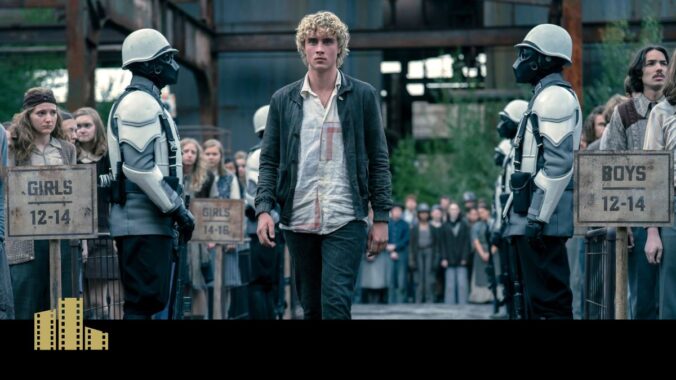
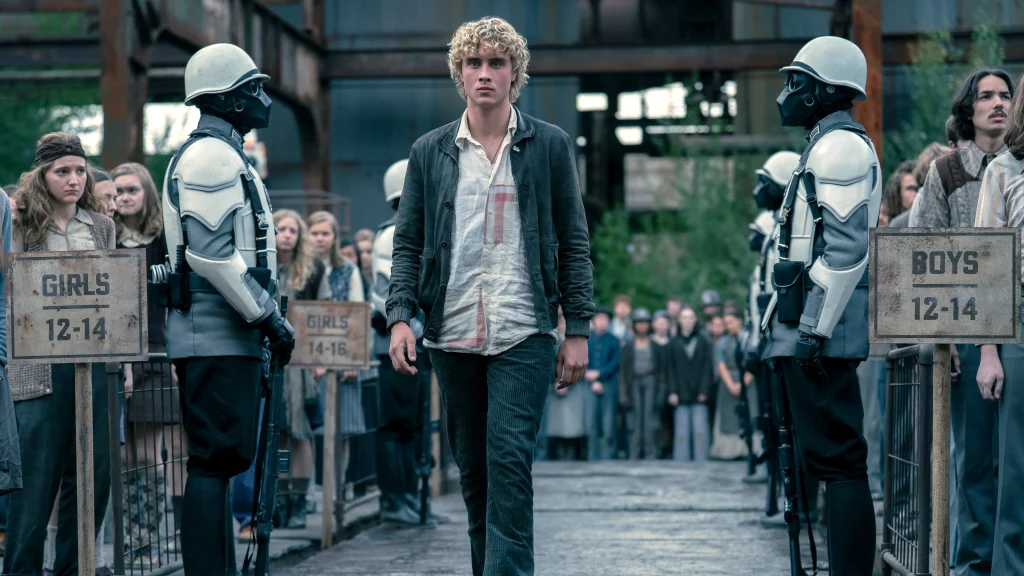
Set 24 years before the events of the original film, the story follows Haymitch Abernathy (Joseph Zada), a 16-year-old resident of District 12 who finds himself forced to compete in the 50th Hunger Games. This particular edition of the annual competition is a special one, with twice the usual number of tributes selected to fight for their lives.
A franchise that knows exactly what it is
One of the nicest things to follow as the film moved through production was just how much affection this series continues to inspire, not only among audiences but also the people involved in bringing it to life. Much of the crew consists of familiar faces from previous instalments, including director Francis Lawrence, who has now managed the impressive feat of directing all but one of the films in the franchise.
And that brings with it a wonderfully reassuring sense of familiarity, despite the entirely different cast. Many major franchises, from Harry Potter to Jurassic Park, have opted to bring in different directors to oversee individual instalments. Lawrence, however, has committed 13 years of his career to The Hunger Games, and that experience really shows on screen.
There’s a confidence in the source material that shines through from the outset. This is a remarkably assured film. It knows exactly what it wants to say, understands the world it’s operating in and, most importantly, knows how to tell its story.
A cast worthy of the Capitol
As has been the case with every film in the series, Sunrise on the Reaping boasts an absolutely exceptional cast. Joseph Zada is sublime as a young Haymitch, channelling Woody Harrelson’s mannerisms and personality remarkably well without simply becoming an imitation. It’s a difficult balance to strike, but Zada makes the character feel entirely his own.
McKenna Grace is equally excellent as fellow District 12 tribute Maysilee Donner, while the wider ensemble provides plenty of memorable performances throughout.
And it would be remiss of me not to mention the wave of nostalgia that comes with seeing so many familiar characters appearing in their younger years. Of the returning characters, Jesse Plemons is particularly impressive as a young Plutarch Heavensbee, capturing enough of the character’s familiar mannerisms to make the connection feel wonderfully satisfying.
Ralph Fiennes also does a tremendous job as a younger President Snow, although I’m still not entirely convinced that I bought him as the same character portrayed by Donald Sutherland and Tom Blyth in the earlier films. Don’t get me wrong, he’s fantastic as usual, bringing that delicately sinister quality that Sutherland embodied so brilliantly. There’s just something about the performance that doesn’t quite hit the mark every single time.
The Games begin, but do they deliver?
The film gets off to a particularly strong start, introducing its key characters, taking us through the all-important reaping ceremony and giving us the familiar montages of tributes learning how to handle their weapons. There’s also a deliciously nasty performance from Glenn Close as Drusilla Sickle, who fits rather comfortably into the world of Capitol excess and cruelty.
It’s all pretty standard Hunger Games territory, but there’s something particularly enjoyable about watching these familiar rituals unfold again. This time, the film gives certain moments a little more room to breathe, allowing the characters and their relationships to develop before the real chaos begins.
Unfortunately, the Games themselves are a little less successful, and probably the least interesting part of the entire film.
“The arena, it’s a killing machine,” quietly suggests Maya Hawke’s young Wiress, and while she’s certainly not wrong, there’s something missing from the experience this time around. It lacks the rawness and sheer intensity that made Catching Fire such a joy to watch, particularly when it came to the mechanics and brutality of its arena.
There’s also a little too much obvious green screen and some less-than-stellar CGI, which makes it difficult to take the environment entirely seriously. The brighter colour palette is a welcome change from the seemingly endless parade of dreary blockbusters, but the artificial-looking surroundings only serve to highlight just how little the actors sometimes have to work with.
It’s a real shame, because everything else about the film manages to pull you in so completely. The story takes a much bleaker turn as we begin to understand how Haymitch became the individual we first encountered in the original The Hunger Games back in 2012.
A story that still has plenty of bite
For those who haven’t read the book, there are some genuinely intense twists and turns that you probably won’t see coming. They’re delivered exceptionally well by a cast that clearly understands the emotional weight of the material. And, once again, I really cannot emphasise enough just how brilliant Joseph Zada is in this role.
There’s a real sense that the film is building towards something much more significant than simply another trip into the arena, and the emotional pay-offs are all the better for it.
There’s no denying that Sunrise on the Reaping is a long film, either. At 158 minutes, it’s the longest instalment in the franchise to date. However, the pacing is surprisingly stellar. The screenplay, penned by Billy Ray and Michael Lesslie, moves through the key story beats at a decent clip while giving the more emotional moments the space they deserve. And rightly so.
Ultimately, The Hunger Games: Sunrise on the Reaping is another thoroughly solid entry in a franchise that, remarkably, hasn’t really missed a beat. The joy of seeing familiar characters collide with an entirely new generation is a testament to the strength of Suzanne Collins’ source material and the filmmakers’ continued understanding of what makes this world so compelling.
Despite some wonky CGI and a middle section that feels considerably less interesting than the two that bookend it, this is still a blockbuster of epic proportions. It has a terrific cast, a gripping story and more than enough emotional weight to justify its place in the series.
Thirteen years after Francis Lawrence first took the reins, there’s still plenty of life left in Panem. And, judging by this latest instalment, I’m certainly not ready to leave it behind just yet.


Leave a Reply