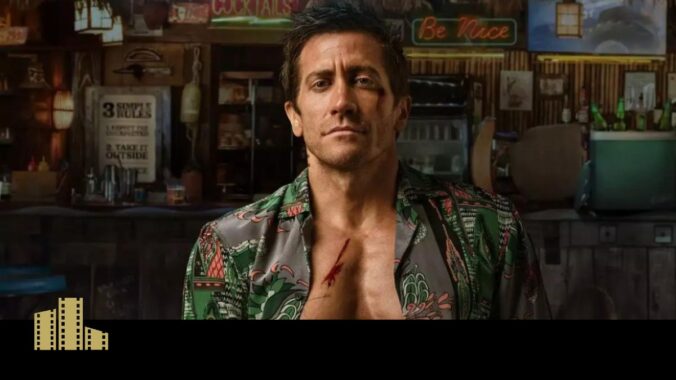
Set against the backdrop of 1989, Road House emerged as a cinematic anomaly, capturing audiences with the inimitable charm of Patrick Swayze alongside director Rowdy Herrington. The film, initially met with lukewarm reception, has since transcended its era to cultivate a robust cult following, even clinching the title of the most-watched at-home movie in 2020.
Such a unique piece of cinematic history seemed impervious to the waves of remakes, reboots, and sequels that have become the industry’s staple. Nevertheless, Doug Liman, whose film credits include hits like The Bourne Identity, Edge of Tomorrow and Jumper, took on the task of reimagining this iconic tale for modern audiences.
In Liman’s rendition, Jake Gyllenhaal is cast as Dalton, an ex-UFC fighter who transitions into the role of a bouncer at a roadhouse nestled in the idyllic Florida Keys. Yet, beneath its serene facade, Dalton uncovers a web of deceit and danger, marking the beginning of his tumultuous journey. The film’s ensemble is impressive, though not without its shortcomings, most notably Conor McGregor’s venture into acting, which disrupts the otherwise decent performances.
This modern adaptation grapples with a litany of issues that undermine its potential. The dialogue often teeters on the edge of absurdity, interspersed with scenes that oscillate between the bizarre and the mundane. The film’s visual narrative, characterised by uninspired camerawork and poor special effects, starkly contrasts with Liman’s filmography, evoking the work of a completely different filmmaker.
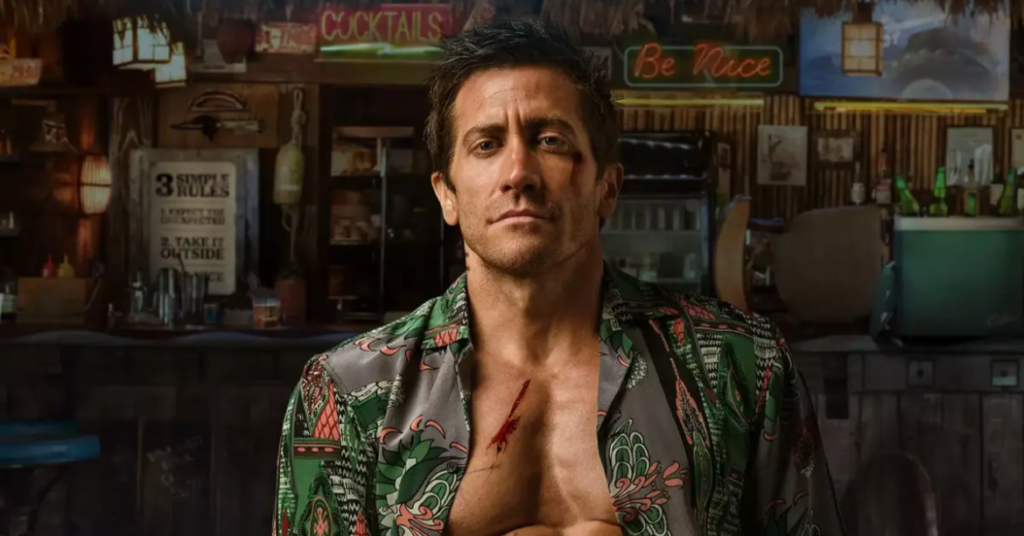
Gyllenhaal’s portrayal of Dalton, while competent, pales in comparison to the vibrant energy and charisma that Swayze infused into the original character, resulting in a sense of miscasting. Jessica Williams features as Frankie, whose role, ostensibly significant in luring Dalton to the roadhouse, ultimately feels underdeveloped and sporadic. She pops up every now and then, but doesn’t actually do anything following her recruitment of Gyllenhaal.
The narrative is further diluted by a series of fragmented subplots involving secondary characters like a bookstore owner and a doctor, portrayed by Daniela Melchoir, which meander without reaching any meaningful resolution. And once McGregor makes his debut, things start to go downhill very quickly. His performance is absurd, channelling a toddler who has recently messed himself.
The action sequences, a crucial element of any action film, are particularly disappointing. The special effects, especially during scenes like extended bar brawls and a climactic boat chase, lack the finesse expected of a Liman-directed film. The CGI’s glaring inadequacies lead to speculation that the decision for a digital release was strategic – after all, it’s harder to see everything on a small screen.
This reboot of Road House inadvertently underscores the intricacies of revisiting classic cinema. The original film, despite being poorly received upon release, with its deft blend of action, character development, and narrative pacing, resonated with audiences in a way that this modern interpretation struggles to replicate.
The remake’s challenges highlight the delicate balance required to meld visceral action with compelling storytelling. In striving to pay homage to its predecessor while carving out its own modern niche, Liman’s Road House serves as a reminder of the timeless allure of the original and the challenge of capturing lightning in a bottle twice.


Leave a Reply