
Leonardo DiCaprio shines as the leader of a 90s financial cult where mansions are churches and Dom Pérignon is holy water.
Resplendent in a Hermes tie and a $50k Rolex, soon-to-be criminal Jordan Belfort stands in front of his obedient mob of brokers, about to utter a phrase that would be etched into the minds of a generation of filmgoers: “I’m not f**king leaving”.
Belfort’s greed and bad choices are embodied by those four words, as Martin Scorsese revives the 80s and 90s era of excess for three hours of cinematic dopamine. It might not be hard to believe that people would be sucked in by Belfort’s rhetoric in an era of Trump, but even 10 years ago, Scorsese’s understanding of wealth worshipers produced a movie of ageless and unmatched entertainment.
The cultural impact the Wolf of Wall Street left is unquestionable. For all the opinion pieces on scenes unpacked in meticulous detail to pop culture references and even Belfort giving financial advice on CNBC (yes, really), the film’s holy water was blessed no more than on its cast.
For Margot Robbie, the Wolf of Wall Street launched her into the cinematic stratosphere, going on to prove herself as studio bankability in The Suicide Squad and as a critical darling in I, Tonya. For Jonah Hill, a man who says he would have starred in this film for $0, that salary seems steep considering the film transformed him from stoner-in-chief to versatile character actor. As for Leo, his career-winning streak just went 29-0.
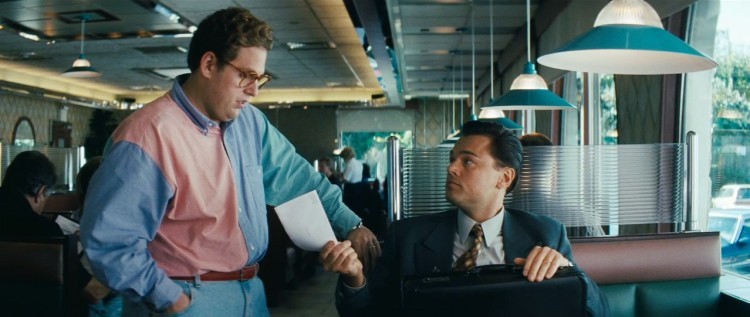
The film tells the story of Wall Street freshman Jordan Belfort founding Stratton Oakmont with his friend and accomplice Donnie Azoff after the crash of 1987. As the pump-and-dump scheme converts his office from a mall-front showroom to a 40th-floor plaza, Belfort and his merry band of brokers come under joint investigation by the SEC and FBI.
Although the Wolf of Wall Street received modest praise upon its release, it instantly became a fan favourite, attracting hoards of mini-Jordan Belfort’s engaging in criminal activity of their own to make it the “most pirated film of 2014” (do not look at me). Presumably, Margot Robbie’s nude scene, an elaborate drug sequence, and a dart board involving “people of short stature” contributed to this. However, its technical prowess shouldn’t be underestimated.
There’s a perfectionist quality to the cinematography and camera blocking that allows chaos to stew in such still environments. In the playroom scene with Belfort and Naomi, Scorsese’s pastels drip deliciously off the screen, each toy building block placed perfectly so Belfort could crawl to her outstretched heel.
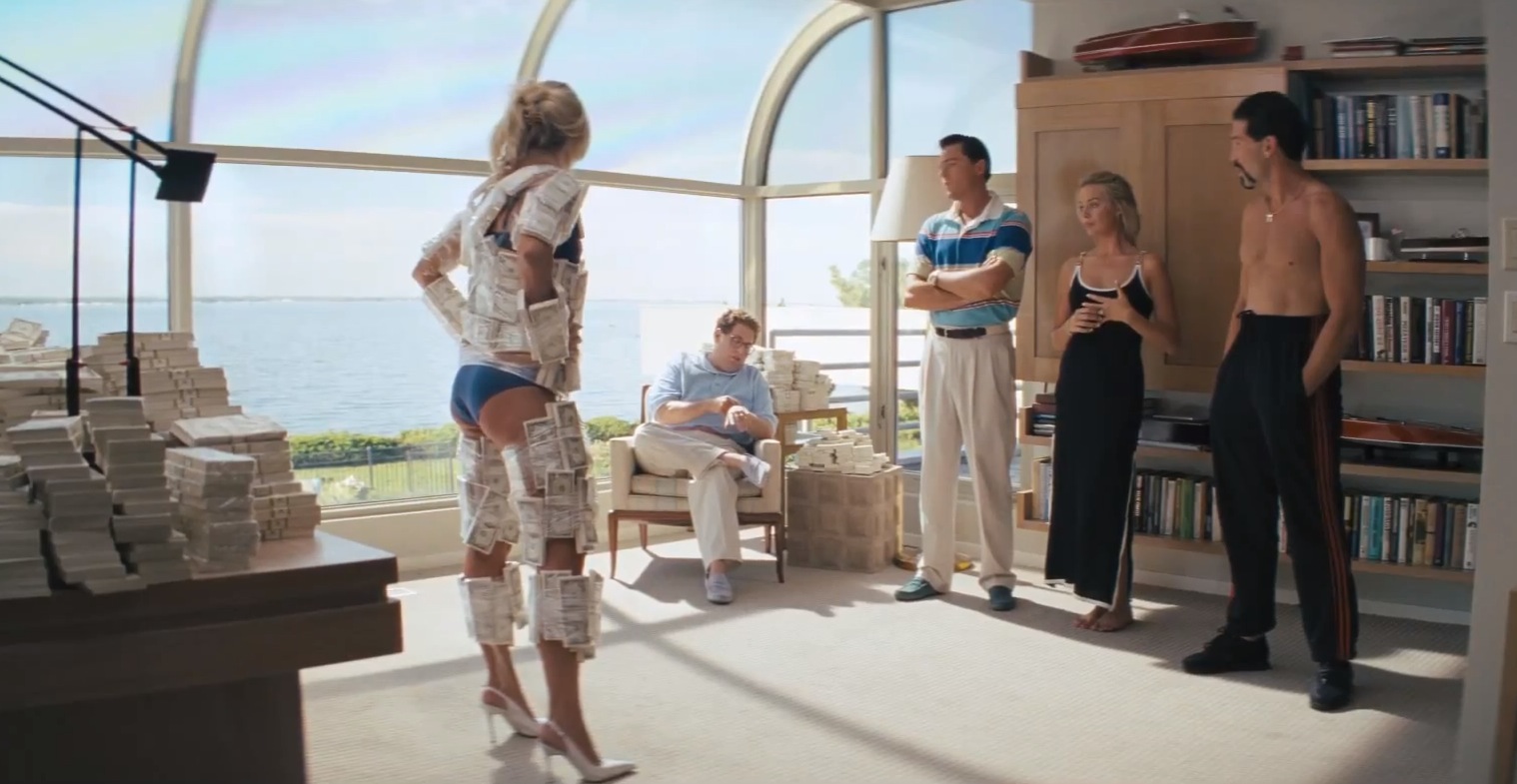
Belfort’s power struggle with Naomi mirrored that of his dealings inside Stratton Oakmont, leading others to follow his faux displays of masculinity. The taping of dollar bills to an assistant’s body, stripper gang bangs in the office and cocaine-snorting competitions. Of course, the debauchery offended many and the depiction of women as either wives, girlfriends, or sex workers was labeled misogynistic, but this wasn’t the criticisms epicenter.
The majority of criticism the film attracted was aimed at Scorsese’s overindulgence in the subject matter he was covering, and to some extent, they were right. Although the breakdown of his marriage, descent into drugs and prison sentence showed there were ramifications to Belfort’s actions, his victims were largely put to one side. However, the victims of the film we feel the most existential heartbreak for are those in the final scene.
As Belfort stands in front of his audience, once a mob of brokers, now a herd of aimless animals, hopelessly asking them to sell a pen, we actually see ourselves, an audience being manipulated. Richard Brody in the New Yorker summed it up perfectly, “The shot shows not just an audience, but the audience: Scorsese puts the film’s viewers face to face with themselves, charges us with compensating for our lack of imagination and fatal ambition through contact with the wiles of a master manipulator… It’s a moment with a terrifying, Olympian blend of compassion, disdain, and anguish”.
Like Silence, or The Irishman, Scorsese’s modern classic allows the storm to calm before delivering a final gut punch. Maybe his intent was that the enjoyment we got from Belfort’s corruption shone a light on how complicit we all are to it. But never has such an unlikeable character been so much f**king fun.


Leave a Reply