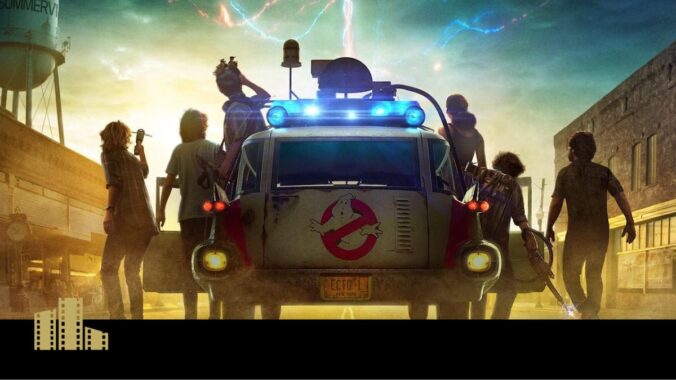
Well I didn’t think I’d be sat here writing this. After the furious backlash to Paul Feig’s 2016 Ghostbusters reboot, I thought the franchise was as dead as a dodo. For what it’s worth, I quite liked the all-female film – it lacked any sense of nostalgia though, and Chris Hemsworth’s role was peculiar, but it was a decent spectacle and fun to watch.
Fast forward to 2021, and director of Juno, Jason Reitman (son of Ivan Reitman who directed the first two films in the series) resurrects the franchise from its slumber with this: Ghostbusters: Afterlife – but how good is it really?
When a single mother and her two children move to a new town, they soon discover they have a connection to the original Ghostbusters and the secret legacy their grandfather left behind.
Let’s get the elephant in the room out the way first. Is this better than the 2016 film? Yes, it probably is, but that doesn’t mean Afterlife is without flaws. Sadly, this reboot/sequel almost drowns in its own sickly sense of nostalgia. From one extreme to the other then?
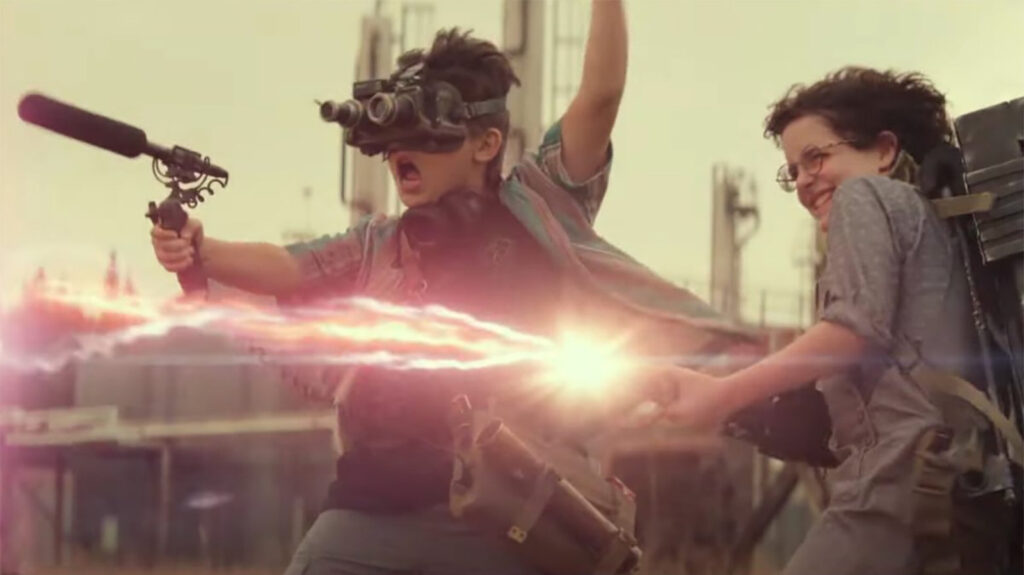
We meet our lead cast early on in the film as Carrie Coon (Gone Girl, The Post), McKenna Grace (Ready Player One, Captain Marvel) and Finn Wolfhard (Stranger Things, IT) try to leave their money troubles behind and move to Summerville, Oklahoma. There they meet Paul Rudd’s excitable seismologist, trying to decipher just why the town seems to suffer from extreme earthquakes on a daily basis.
The ensuing film is one that has a real problem with pacing. Very little seems to happen, and then all of a sudden you are flung into a strong finale with some poignant moments that won’t be spoiled here.
What should have been the film’s strongest suit however, the cast, is actually a little disappointing. The script, written by Gil Kenan and director Jason Reitman is flat and these usually fabulous actors are lumbered with overly expositional dialogue and a sense of humour that doesn’t always land. For a film that’s two hours long, it feels like the characters don’t do that much, with the film switching in and out of different story threads far too often to add some forward momentum.
Paul Rudd’s character in particular is disappointingly underused, and as much as I hate to say it (because I love Paul Rudd along with everyone else on earth), he feels incredibly miscast in the role he’s playing here. By far the film’s best character is McKenna Grace’s Phoebe.
Nevertheless, the special effects are on the whole very good. A nice mix of animatronics and CGI add a 90s feel to the film, a smart move considering Ghostbusters II released in 1989 – if the series had continued, it would have been likely a second sequel would have released during the decade. Things start to look a little messy in the film’s action-packed finale – certain points had me thinking of Mortal Kombat 1995 (which is most definitely not a good thing) – but overall, they work well for the Ghostbusters brand.
The ghouls used are fine if a little generic in design (although a franchise favourite does make a welcome return), and there’s a distinct lack of them across the running time. One thing the 2016 reboot did do well was the ghost designs, they were really excellent.
But it’s in the nostalgic elements where the film falls short. We’ve become accustomed to huge blockbusters reigniting the public’s love of classic franchises, whether it be Jurassic World, Star Wars: The Force Awakens or even Jumanji but the nostalgia feels earned. Here the callbacks to the first two films make up far too much of the main story, almost like the screenwriters were too afraid of generating the same kinds of negative feedback their predecessors received. In this instance, they went too far in the opposite direction.
Overall, Ghostbusters: Afterlife is a nicely directed entry into the franchise, but one which plays it very safe. For diehard fans of the series, the callbacks are sure to go down well after the lack of them in Paul Feig’s 2016 reboot, but for everyone else, even general fans, scratch beneath the surface, and there isn’t really a lot there.


Leave a Reply