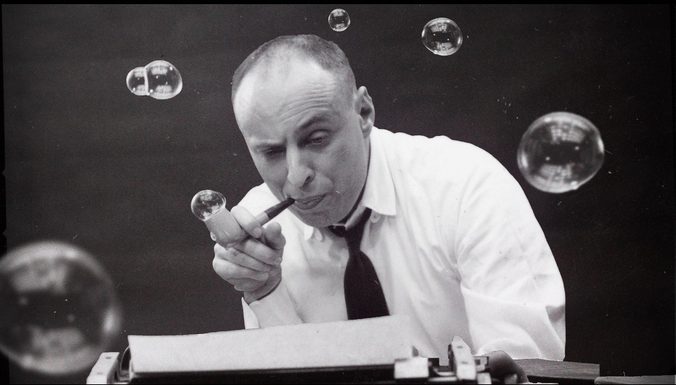
Having made its world premiere at 79th Edinburgh International Film Festival, The MAD World of Harvey Kurtzman, is a feature documentary directed by Bart Simpson and executive produced by Terry Gilliam (founding member of Monty Python).
The film tells the story of cartoon artist Harvey Kurtzman (1924-1993), the creator of MAD Magazine, which inspired the likes of Matt Groening (creator of The Simpsons), Terry Gilliam, Robert Crumb and Art Spiegelman (creator of Maus),and had a instrumental impact on the world of comics, satire and popular culture of the time.
Featuring interviews with close friends and family of Kurtzman, with his youngest daughter Nellie Kurtzman serving as the central voice in the documentary, and rare archival footage, including interview footage of Kurtzman, handcrafted animation, and an original jazz score by Marty Hailey, that perfectly accompanies the style of Kurtzman’s art, this documentary gives insight into the professional and personal life of Harvey Kurtzman and how his work helped redefine American humour and visual storytelling.
From his early college days, drawing cartoons and comic strips for his fellow class members on noticeboards, Kurtzman joined Timely Comics, which eventually became Marvel Comics, and became an editor by the big-man himself Stan Lee. After a few years of producing the strip, Hey Look!, Kurtzman moved to EC Comics and began to produce comics there more focused on the harsh realities of the world. Despite being quite an introvert in his home life, Kurtzman projected his own concerns and criticisms about his contemporary world onto the (cartoon) page. His work frequently satirically lynched those in power and authority, desperate to expose his readers to the lies and corruption of the establishment – his anti-war comics eventually resulting in him being investigated by the FBI.

Going into this film knowing little to nothing about Kurtzman, I confess I left still knowing very little. While a well-constructed, edited and styled documentary, the film falls short in really delving into the specifics as to why Kurtzman’s work was so influential and beloved. With the exception of the section about his work on (anti-) war comics, that uses jarring and graphic comic cartoons of a lost child sitting amongst war rubble during the Korean War; certainly exemplifying the active anti-war, anti-establishment sentiments in his work.
Beyond this, the film gives a verbose, glossed-over statement that Kurtzman changed cartoons and the comics industry forever, but lacks in substantial reasons and evidence as to why and how. Lots of the brief visual panels and designs shown are not fully contextualised within the timeline of Kurtzman’s career. The audience has to simply take their (Simpson, Kurtzman’s peers) biased word for it that Harvey was an influential guy. It makes it hard to understand who the intended target audience is for this documentary.
Feeling more like a passion-project for director Bart Simpson that is more interested in glorifying the work of his favourites (Kurtzman and his proteges) than it is in giving an uneducated audience a basic biography of his life and the impact of his work, or mega-fans any fascinating new insights, beyond some of the archival footage and a nostalgic appeal perhaps.
The end result is a disengaging hagiography of Kurtzman’s life, that is preoccupied with the fact that Kurtzman was a role model for his peers and the likes of Gilliam taking president over giving the viewer insight into the complexity and intrigue of the life of man who was a father, husband, war veteran, child of Jewish immigrants, activist, and teacher as well as he was revolutionary cartoonist. Gilliam’s admiration for Kurtzman is blatant, he said, “When Mad Comics came out, it completely changed my view of the world. It was the beginning of my fascination with Harvey Kurtzman.
He was a god ultimately for me by the time I got to college. I would practically worship him.’ Indeed, the whole film seems to hold Kurtzman on a pedestal, this lack of critique makes the documentary feel disconnected, feeling completely irrelevant in the 21st century and hollowing the film’s broad claims that Kurtzman’s work sustains as fundamental to ideas of satire and critiquing pop culture for future generations.
For me especially, as an ‘outsider’ viewer (I hold no knowledge about the comic industry of the time), I struggle to see the greatness of the man – beyond his strive for creative revolution and artistic talents – because the documentary doesn’t really show any.
The sections about his time working for Playboy and his financial and business disputes with William Gaines initially suggest the imperfection of the man, but the conclusive tonality of these parts of the film end up portraying Kurtzman as somewhat of an arrogant failure unable to acknowledge his own shortcomings – just as his proteges and peers and fanatic followers like Simpson seemingly can’t either.
Being professional fanboys has blinded them to the potential this documentary film had to be a deep-dive exploration of an unique, imperfect, interesting person’s unique, imperfect, interesting life story.
However, the film does a remarkable job of editing together the collage of clips and stills pertaining to Kurtzman’s work, successfully shining a light on his artistic talents in a way that is celebrative and representative of his colourful and creatively progressive attributes. These visuals, aided by the equally as colourful score, and the genuine manner in which his family and friends recount his life, attitude and ethos, makes the film a vibrant, nostalgia piece that sadly feels more like an ode to the specific influence of Harvey Kurtzman on a few (no longer particularly well-known) individuals as a way of upholding their own legacies, rather than a documentary accurately unpacking the life and career of such an influential individual.


Leave a Reply