As the glitter of the Oscars approaches on March 10th, there’s an intriguing conversation stirring among cinema buffs. It turns out that this year’s crop of films contending for the prestigious Best Picture award might just be testing the limits of moviegoers’ patience with their extended runtimes. With a majority of the nominees clocking in over two hours, including the highly favoured Oppenheimer, recent research brings to light some thought-provoking insights into our film-watching habits.
A comprehensive survey of 2,000 UK residents has revealed a significant preference for more concise cinematic experiences. Almost half of the respondents advocate for films to cap at two hours, while nearly 30% believe that even breaching the 90-minute mark is excessive. This preference for shorter movies seems slightly more pronounced among women, though both genders seem to agree on the two-hour threshold as a sweet spot.
The reluctance towards longer films could be attributed to diminishing attention spans, a trend supported by a study from the Centre for Attention Studies at King’s College London in 2022, which reported a widespread perception of declining focus among adults. Moreover, our habits around cinema concessions, particularly the oversized drinks (supersize Diet Coke anyone?), might be contributing to the need for mid-movie breaks, potentially causing us to miss key moments in the narrative.
But what are we missing out on when nature calls during these cinematic epics? For example, in this year’s longest Best Picture nominee, Killers of the Flower Moon, stepping out for a quick break could mean missing critical plot developments. Similarly, crucial scenes in Oppenheimer, another lengthy nominee, could be lost to a bathroom visit, affecting our understanding and enjoyment of the film.
The survey also sheds light on the ongoing battle between cinema and streaming services, with a significant portion of respondents expressing a preference for binge-watching TV series over film. Yet, the cinema experience still holds a special allure, with a notable portion of the audience evenly split between streaming at home and traditional theater-going, indicating a diverse set of viewer preferences.
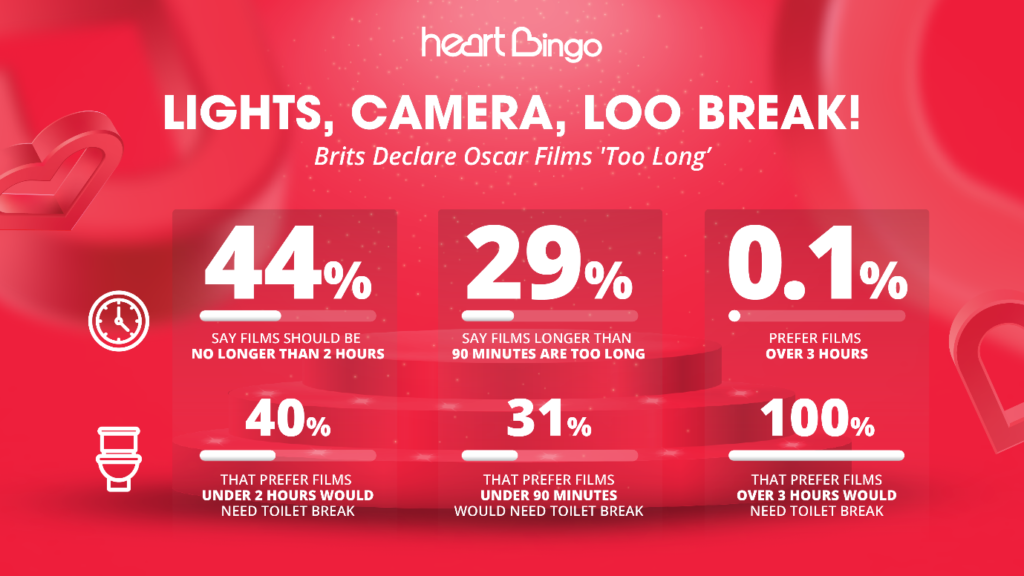
Despite the challenges faced by cinemas, including industry strikes and economic pressures, there’s a ray of hope with a reported 6% increase in attendance in 2023. This resilience suggests a slow but steady recovery for cinemas and highlights the enduring appeal of the big-screen experience.
The survey, conducted by Censuswide on behalf of Heart Bingo between February 20th and 22nd, 2024, not only provides a snapshot of current film-watching trends but also raises important questions about the future of cinema. As filmmakers and distributors navigate these evolving preferences, the balance between artistic vision and audience comfort remains a critical consideration.
As we celebrate the artistry and storytelling of this year’s Oscar nominees, from the shortest to the most epic in duration, it’s a poignant moment to reflect on how our viewing habits are shaping the cinematic landscape. Whether we’re in it for the long haul or prefer our narratives more succinct, our collective passion for film continues to unite us in theaters and living rooms around the world.


Leave a Reply